Newari Khaja Set (Kathmandu Valley Brass-Platter Snack Feast)
The Newari khaja set, a brass-platter feast of beaten rice, lentil cakes, smoky meat, and pickles. The quintessential Newari snacking tradition from the Kathmandu Valley, explained component by component.
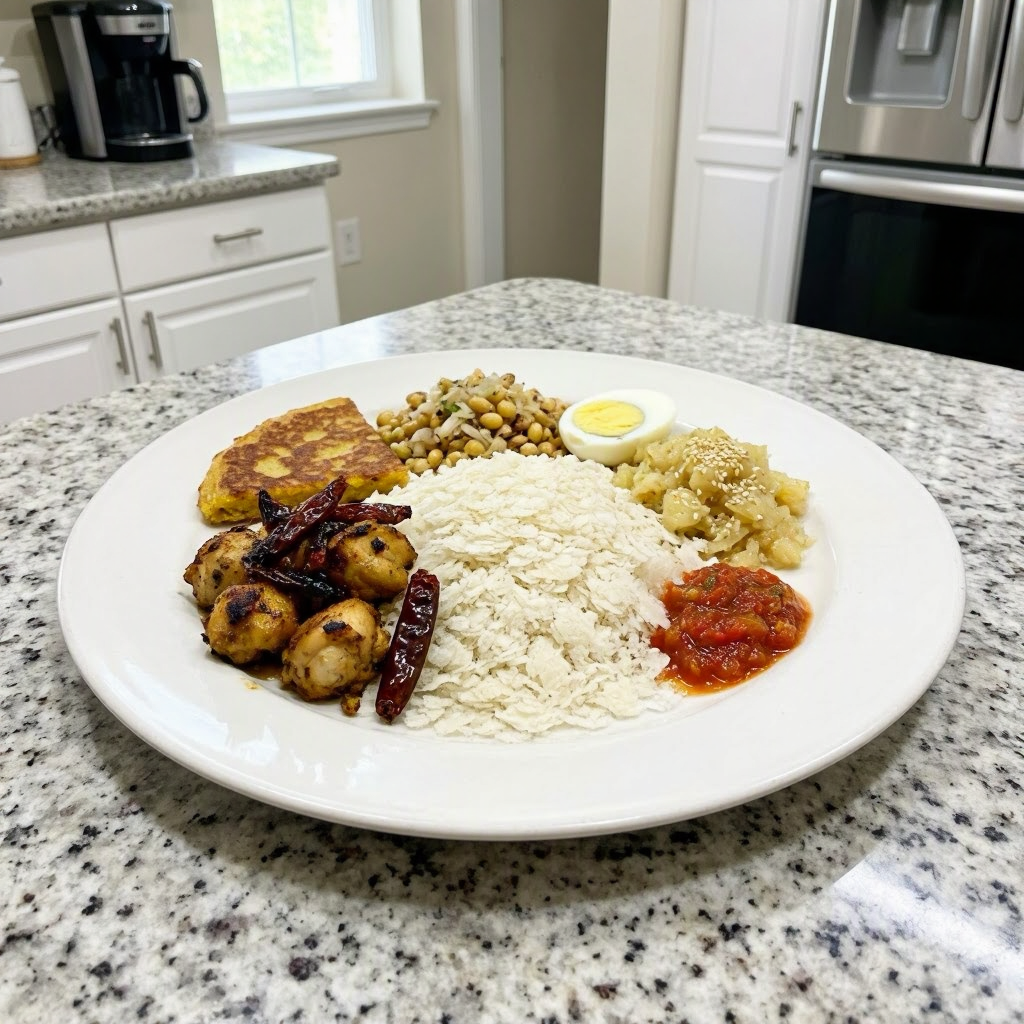
The Newari khaja set is the beating heart of Newar food culture, a carefully composed brass platter (chukey) served at every significant moment in Newar life. Born from the exceptional fertility of the Kathmandu Valley’s alluvial soil, this snacking tradition has been refined over centuries by merchant families and artisans in Patan, Bhaktapur, and old Kathmandu. It is what every Newari household serves for Mha Puja (Newari New Year), guthi feasts, weddings, ancestor rites, and temple ceremonies. The very word khaja means “snack” in Nepali, but among the Newars, a proper khaja is a complete cultural statement, a way of saying “you matter, and we honor you with abundance.”
Unlike daal bhat, which is built around hot rice and lentils, the Newari khaja is built around chiura (beaten rice, pressed flat and dry, eaten cold), with everything else arranged in small heaps around it. You eat it with bare hands after ritual hand-washing, mixing and matching textures and flavors. The platter is balanced by design: starchy, fatty, smoky, sour, fresh, hot, cold, every component contrasts with its neighbour. As the Newari saying goes, “khana ra achar ko bera”, the marriage of food and pickle.
This page is not a single recipe but a guide to assembling the platter, with links to each individual recipe on the site so you can build the whole thing course by course.
What goes on the platter
Chiura, beaten rice
The foundation. Pressed, flattened, dried rice flakes that arrive papery-thin and require no cooking. Sometimes lightly dressed with salt and ghee. Chiura is the silent base that everything else gets piled on; do not skip it. Available at any South Asian grocer (look for “chiura” or “poha”, the thick variety, not the thin one used in Indian breakfast).
Bara, black-lentil pancake
A thick savory pancake of ground whole black lentils, cooked on a hot tawa in mustard oil. Crisp at the edges, soft in the middle, often topped with a cracked egg or spiced minced meat. The protein workhorse of the platter and the perfect vehicle for pickle.
Chicken Choila, smoky spiced meat
The traditional version is buffalo (ranga choila); the chicken version is the modern, lighter form. Boiled meat tossed with mustard oil that has been bloomed with charred dried red chilies, then sharpened with raw ginger, garlic, lemon, and timur. Smoky, fiery, served at room temperature, this is the dish every Newari reaches for first.
Aloo Achar, sesame potato salad
Boiled potato cubes tossed in a dressing of toasted sesame paste, mustard oil bloomed with methi, lemon juice, ginger, green chili, and timur. Sharp, tangy, sesame-rich, it cuts through the richness of the choila and ties the whole platter together. (Note: this is the standalone achar, not to be confused with aalu cauli, the warm potato-cauliflower curry.)
Bhatmas Sadheko, spiced soybean salad
Roasted yellow soybeans tossed with mustard oil, lemon, salt, ginger, green chili, cilantro, and a pinch of timur. Crunchy, nutty, slightly grainy, a textural accent and a protein boost that pairs especially well with cold beer or chiyaa.
Saag, quickly cooked greens
Mustard greens or spinach, cut into short lengths and quickly stir-fried in mustard oil with a touch of garlic and dried red chili. Lightly cooked so they keep their bite. A verdant counterpoint to the heavier items.
Boiled or fried egg
Halved hard-boiled egg, or sometimes a small fried egg sunny-side-up. Richness, protein, and a yolk that becomes a sauce when mixed with the achar and the chiura toward the end of the meal.
Buff Sukuti (or sekuwa), concentrated meat luxury
Thin strips of dried, spiced buffalo (or fresh-grilled meat in the chicken sekuwa style), rehydrated briefly in mustard oil with chili and garlic. Concentrated, chewy, intensely flavored, a luxury accent that signals the platter is for a special occasion.
Achar medley
A small saucer of additional pickles, fresh tomato achar, lapsi (Nepali hog plum) pickle, mooli (radish) pickle, or momo achar. Pickles are not a sidenote on a Newari platter; they are the brightness that makes everything else sing.
How to assemble and serve
The khaja is traditionally served on a single round brass platter (chukey) divided into small sections, one per component. Chiura goes in the center; everything else is arranged around it in small mounds. Hands are washed before and after, and the food is eaten with bare hands, mixing and matching as you go.
A typical eating rhythm: start with a pinch of chiura and a bite of saag (palate cleanser); add bara with a smear of achar; move to choila with chiura; nibble at the bhatmas and sukuti throughout; break the egg yolk into the chiura toward the end; finish with the sharpest pickle.
Drinks: Newari khaja is paired with aila (clear, fiery Newari rice spirit, distilled at home) or chyang (rice beer). Both cut through the richness and aid digestion. Tea, black, with ginger and honey, comes after.
When the khaja is served
- Mha Puja (Newari New Year, late October–early November): the most auspicious khaja meal of the year, eaten the day after Lakshmi Puja
- Guthi feasts: seasonal gatherings of neighborhood mutual-aid societies, the social backbone of Newar life
- Weddings, engagements, and bhoj feasts: the sign of a host honoring their guests
- Death rites and matamari ceremonies: khaja signals the continuation of community after loss
- Temple jatra processions: especially around Patan Durbar Square and Pashupatinath
- Any auspicious occasion: birth, birthday, business opening, or the arrival of an honoured guest
Where to eat the real thing in Nepal
- Patan (Lalitpur): Honacha, near Patan Durbar Square, a multi-generational Newari khaja institution. Order the full chukey, sit on a low stool, eat with your hands.
- Bhaktapur: small guthi-run eateries around Durbar Square serve ritual-quality khaja. Bhojan Griha serves a more polished version for visitors.
- Kathmandu: small bhattis around Asan, Indra Chowk, and near Pashupatinath temple. Ask any Newar friend where their guthi eats.
- At home: the very best khaja is made in Newari kitchens for family ceremonies. If you ever receive an invitation to a Newar bhoj, say yes.
Building the khaja in your own kitchen
A full khaja takes time, but the reward is a single dramatic meal that feeds four to six people on a long weekend afternoon. The best plan: pick a date, work backwards. The choila and bara want to be the centerpieces; the bhatmas, achar, and saag are quick assembly jobs. Chiura and sukuti are pantry items. Allow a full afternoon for the first attempt; subsequent ones get faster.
A weekend timeline:
- Day before: Soak the urad dal for bara. Make bhatmas sadheko and aloo achar, both keep beautifully overnight.
- Day of, 2 hours before: Boil and dress the chicken choila; let it rest at room temperature for the flavors to marry.
- 30 minutes before: Cook the bara on a hot tawa. Quickly stir-fry the saag. Boil the eggs.
- At the table: Arrange everything on the largest platter you own, around a generous mound of chiura. Pour the aila or open the beer. Eat with your hands. Take your time.