Yomari (Newari Sweet Steamed Rice Dumplings)
Yomari, the sacred Newari steamed dumpling, fish-shaped and filled with chaku (jaggery cooked with sesame). Made for Yomari Punhi, the December full-moon festival of the Kathmandu Valley.
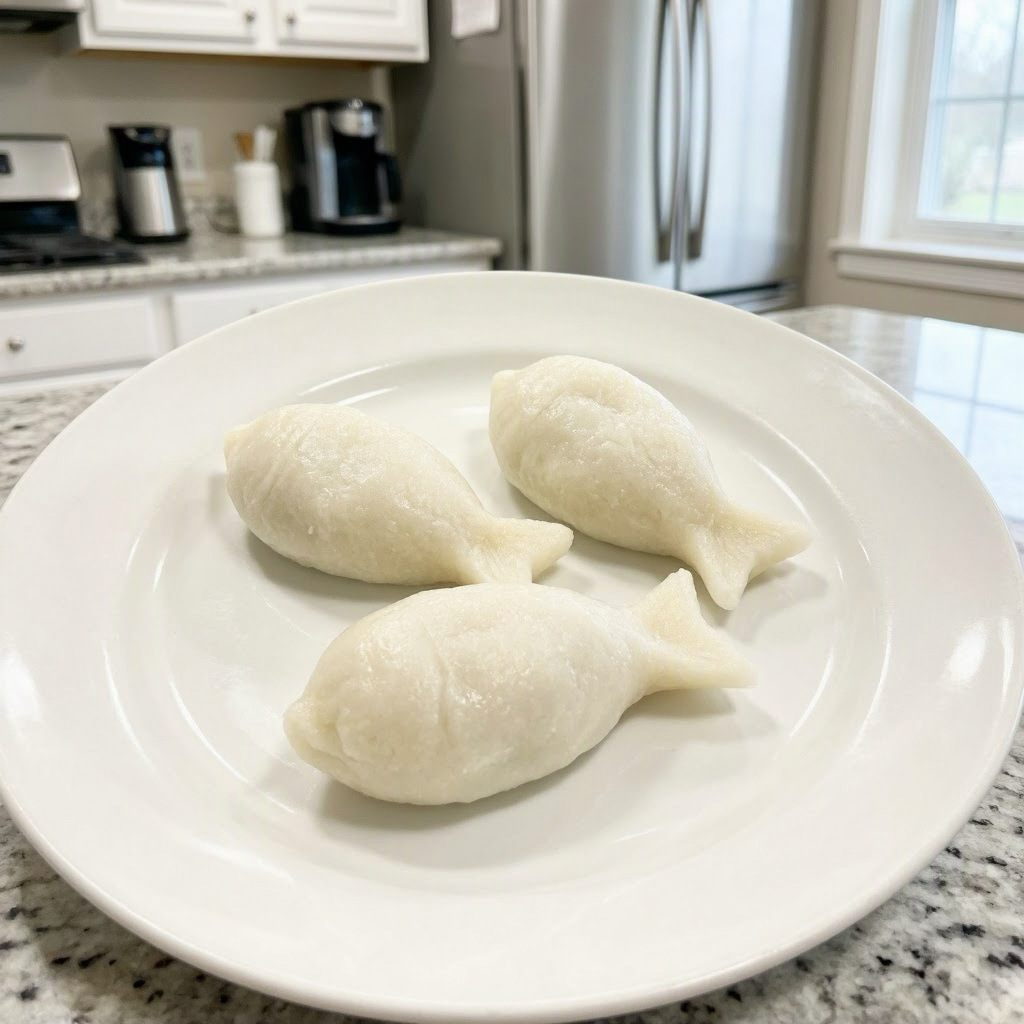
Of all the food traditions of the Kathmandu Valley, yomari is the one I find most beautiful. It is a small, hand-shaped, fish-tailed steamed dumpling of rice flour, filled with chaku, jaggery cooked down with toasted sesame seeds and coconut, eaten for one festival, on one night a year. Yomari Punhi, the full moon of December (the Newari month of Thinla), marks the end of the rice harvest in the Kathmandu Valley. Newari families gather, shape yomaris together, and offer the first ones to Annapurna, the goddess of grains, as thanks. Some are hung above the kitchen door for prosperity through the winter. The rest are eaten warm, with milk tea, while the cold December moon climbs over the valley.
It is a recipe that asks for time and a few minutes of patient hand-shaping, but it is forgiving, and once you have shaped two or three you will find a rhythm. The dough is hot rice flour kneaded with hot water; the filling is a chunky-sweet mix of jaggery and sesame; the cooking is gentle steaming. Make them with people you love. That is the whole point of yomari.
Ingredients
For the dough (makes 12–14 yomaris)
- 2 cups fine rice flour (preferably chini-chini or short-grain rice flour, available at South Asian grocers)
- 1 to 1.25 cups water
- 1/4 teaspoon salt
- 1 tablespoon ghee, melted
For the chaku filling
- 200 g jaggery (chaku / gud), grated or finely chopped (palm jaggery is most authentic)
- 1/3 cup white sesame seeds (til), toasted
- 2 tablespoons fresh coconut, finely grated (or 1 tablespoon dried unsweetened coconut)
- 1 tablespoon ghee
- 1/4 teaspoon freshly ground green cardamom
- A pinch of nutmeg
- 1 tablespoon of very finely chopped walnut, almond, or khoya (optional)
Instructions
Toast the sesame: In a dry skillet over medium heat, toast the sesame seeds, stirring constantly, for 2–3 minutes until they turn pale gold and smell deeply nutty. Tip onto a plate to cool. Once cool, lightly crush them with a rolling pin or in a mortar, coarse, not powdered. The texture is part of the joy.
Make the chaku filling: In a small heavy pan over low heat, melt the ghee. Add the grated jaggery and stir gently for 2–3 minutes until just melted into a thick, glossy syrup, do not boil or it will harden into hard candy. Off the heat, immediately stir in the toasted sesame, coconut, cardamom, nutmeg, and chopped nuts (if using). The mixture will look loose at first but will firm up as it cools. Spread it out on a plate to cool to room temperature; it should be soft, sticky, and clumpy, like a chunky brown sugar caramel.
Make the dough, hot water is the secret: In a heatproof bowl, combine the rice flour and salt. In a small saucepan, bring 1 cup of water and the melted ghee to a rolling boil. Pour the boiling water over the flour all at once and stir vigorously with a wooden spoon until a shaggy dough forms. Cover the bowl and let it rest for 5 minutes, this is the critical step that gelatinizes the rice flour and gives yomari their distinctive translucent, slightly chewy texture.
Knead while warm: Once cool enough to handle (but still warm), turn the dough onto a clean surface and knead for 4–5 minutes until smooth and pliable, like soft playdough. If it feels dry or cracked, dip your fingers into hot water and knead it in a teaspoon at a time. If it feels sticky, dust your hands with a little extra rice flour. Cover with a damp cloth at all times, yomari dough dries out fast.
Shape the yomaris: Pinch off a walnut-sized piece of dough (about 25 g). Roll into a smooth ball, then flatten between your palms into a 3-inch oval. Cup the oval in your non-dominant palm and place 1 teaspoon of the cooled chaku in the center. Bring the long edges of the oval up and over the filling, pinching them together along the top to seal, like closing an envelope. Then gently squeeze and pull one end into a long, tapered fishtail or fig-tail point, leaving the other end rounded. Smooth out any cracks with a wet fingertip. Place finished yomaris on a parchment-lined or banana-leaf-lined tray, covered, while you shape the rest. (If a fish shape feels intimidating, a simple closed teardrop or fig is equally traditional.)
Steam: Bring 2 inches of water to a rolling boil in the base of a steamer. Lightly oil the steamer baskets (or line with parchment, or banana-leaf squares for the most authentic look). Arrange the yomaris with at least 1/2 inch between each, they will not stick if oiled, but they should not touch. Cover and steam over high heat for 12–15 minutes. The dough will turn from chalky white to glossy and slightly translucent, that is when they are done.
Rest, then serve warm: Let the yomaris sit in the covered steamer, off the heat, for 5 minutes, the filling is molten and the dough firms up beautifully in this rest. Serve warm, on a plate or banana leaf, with a small bowl of warm milk or chiya (Nepali milk tea). The first bite should be a tender, slightly chewy outside giving way to a warm flood of jaggery and sesame.
Cultural notes
- Yomari Punhi falls on the full moon of Marga / Mangsir (late November or early December), marking the end of the rice harvest in the Kathmandu Valley. Newari families fast during the day and gather in the evening to shape and steam yomaris together, a multi-generational kitchen ritual.
- The shape carries meaning. The fishtail represents abundance and fertility; some families also shape yomaris as the four-faced Kumari Yomari (representing the Newari goddesses Lakshmi, Saraswati, Kumari, and Annapurna). The first yomaris are offered to the household altar before anyone eats.
- Hung at the door: Two yomaris are traditionally tied with thread and hung above the kitchen door or rice store. They are believed to invite Annapurna’s blessing for plentiful grain through the coming year.
Notes
- Filling alternatives: Khoya (reduced milk solids) mixed with sugar and cardamom is the rich, dairy version. Spiced lentils with ginger and pepper make a namkeen yomari (savory), eaten as a snack rather than for the festival.
- Make-ahead: Shaped, unsteamed yomaris can be refrigerated overnight (covered) or frozen on a tray and bagged. Steam from cold (15 min) or frozen (20 min), no thawing needed.
- The shaping rhythm: Don’t worry about uniformity. Newari grandmothers will tell you that a slightly lopsided, hand-pinched yomari is more beautiful than a perfect one, because you can see the hands that made it.